If we had to name the single biggest cause of small engine repairs, it wouldn't be worn-out parts or hard use. It would be fuel — specifically, old fuel and the ethanol in it. Understanding why helps you avoid the most common (and most preventable) breakdown there is.
Why Gasoline Goes Bad
Gasoline is a blend of chemicals that start evaporating and reacting with oxygen the moment the can is opened. Within about 30 days, fuel begins to lose the light, volatile compounds that make an engine easy to start. Within a few months, it can turn into a gummy, varnish-like residue.
In a big car engine with a sealed, pressurized fuel system, this happens slowly. In a small engine with a vented tank and a carburetor full of passages thinner than a pencil lead, degraded fuel causes problems fast.
The Ethanol Problem
Most pump gas contains up to 10% ethanol (labeled E10). Ethanol boosts octane and reduces emissions, but it causes two headaches for small engines:
- It attracts water. Ethanol is hygroscopic — it pulls moisture out of the air. Over time, water accumulates in the tank.
- It separates. When enough water is absorbed, the ethanol-water mix drops to the bottom of the tank in a process called phase separation. Your engine then tries to run on a corrosive, hard-to-ignite layer of fuel.
The result is corrosion, clogged carburetor jets, and a machine that won't start or runs rough.
What Old Gas Actually Does Inside Your Engine
| Problem | Cause | Symptom | |---------|-------|---------| | Clogged carburetor jets | Varnish from evaporated fuel | Won't start, or starts then dies | | Corroded fuel system | Water from ethanol | Rust, rough running | | Gummed primer/lines | Sticky fuel residue | No fuel reaching the engine | | Hard starting | Loss of volatile compounds | Many pulls to start |
Nearly every no-start machine that comes through our shop after sitting for a season traces back to one of these.
How to Prevent It
Buy Fresh, Buy Small
Only buy as much gas as you'll use in about 30 days. That old half-full can in the garage is doing your equipment no favors.
Use a Fuel Stabilizer
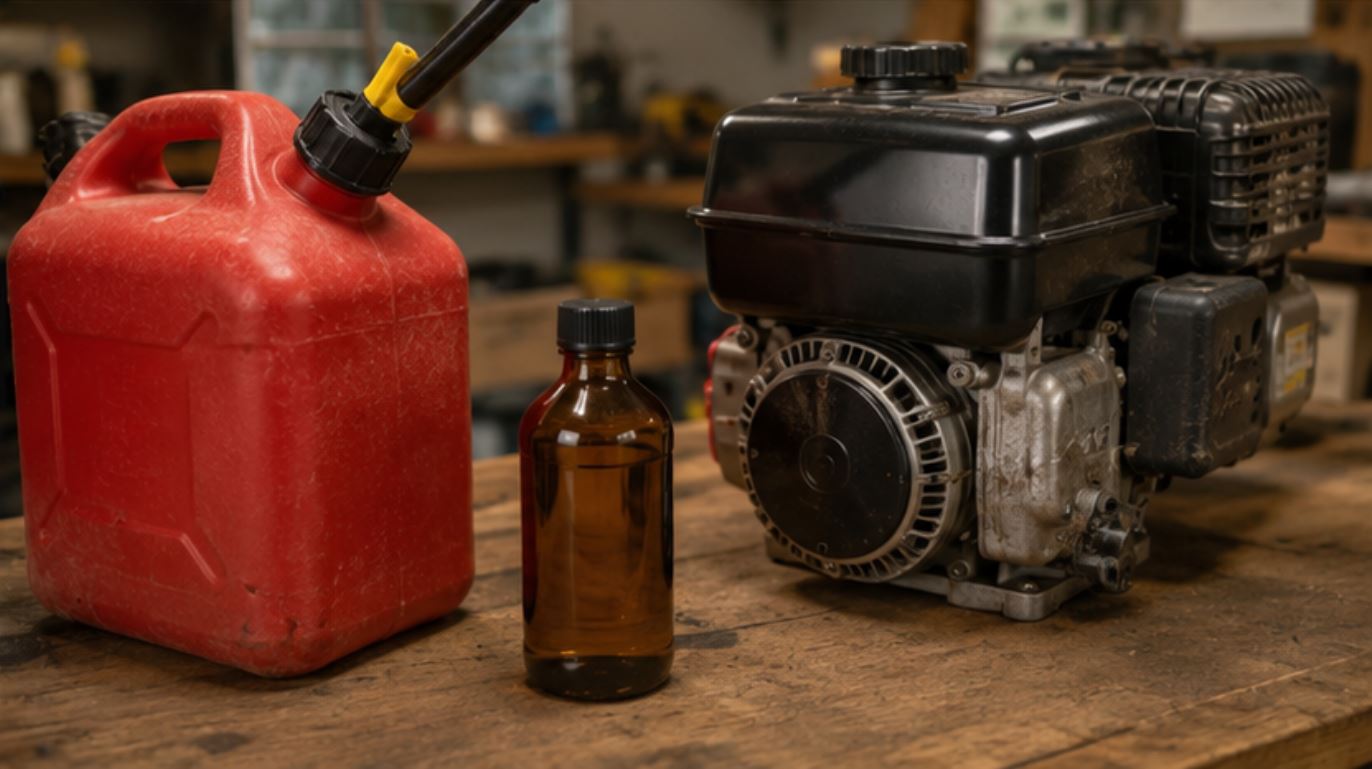
A quality stabilizer keeps fuel usable for months by slowing oxidation. Add it every time you fill your storage can and you'll never think about it again. Always stabilize fuel before any storage period.
Consider Ethanol-Free Fuel
Ethanol-free gasoline (often sold as "recreational" or "rec" fuel) and canned pre-mixed fuels cost more but store far longer and eliminate the water problem. For equipment you use rarely — generators, chainsaws, backup tools — the extra cost is cheap insurance.
Run It Dry or Store It Full and Stabilized
Before long-term storage, either run the carburetor dry or fill the tank with stabilized fuel. Don't leave a partial tank of untreated gas to varnish over.
Mix Two-Cycle Fuel Fresh
For chainsaws and trimmers, mix only what you'll use soon. Old mix fuel is a frequent no-start cause.
The Takeaway
Fuel is the lifeblood of your engine, but only when it's fresh. Treat it right — buy small, stabilize it, and never store equipment on untreated gas — and you'll sidestep the most common repair in the small engine world.
If old fuel has already taken its toll and your equipment won't start, Precision Small Engine can clean or rebuild the carburetor and service the fuel system to get it running reliably again.